Best Time to Visit Ha Giang: Weather & Seasonal Guide
Ha Giang is beautiful in every season. Discover the weather by month, buckwheat flower season, golden rice terraces, and the best time to plan your Ha Giang journey.
- Ha Giang Weather – When Is the Best Time to Visit?
- Ha Giang Weather by Season
- 🌸 January – March: Spring and Flower Season
- 🌿 April – June: Green Mountains and Water-Pouring Season
- 🌧️ July – August: Summer and Rainy Season
- 🌾 September – October: Golden Rice Season
- 🌸 October – November: Buckwheat Flower Season
- ❄️ December: Winter in Ha Giang
- So, What Is the Best Time to Visit Ha Giang?
- Best Time for a 3-Day 2-Night Ha Giang Trip
- How to Check the Weather Before Your Ha Giang Trip
- Travel Tip for Your Ha Giang Journey
Ha Giang Weather – When Is the Best Time to Visit?
Located in the mountainous far north of Vietnam, Ha Giang experiences noticeable seasonal changes throughout the year. Each season offers a different experience: spring brings blooming flowers, summer covers the mountains in lush greenery, autumn turns the rice terraces golden, while late autumn is famous for the buckwheat flower season.
Choosing the right time to visit can make your journey more enjoyable, especially when traveling through mountain passes and scenic routes around Quan Ba, Yen Minh, Dong Van and Meo Vac.
Ha Giang Weather by Season
🌸 January – March: Spring and Flower Season
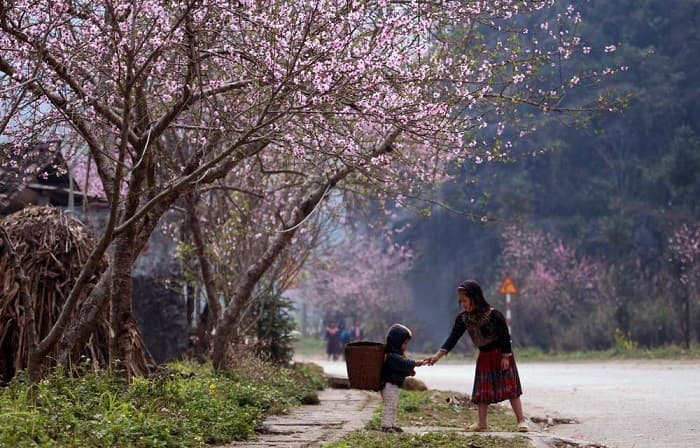
The beginning of the year brings a peaceful and colorful atmosphere to Ha Giang. Peach blossoms, plum blossoms and other mountain flowers begin to bloom across villages and valleys.
The weather can still be quite cold, especially in the early morning and evening. This period is ideal for travelers who enjoy spring scenery, traditional villages and photography.
Travel tip: Bring a warm jacket because temperatures can vary significantly between daytime and nighttime.
🌿 April – June: Green Mountains and Water-Pouring Season

From April, temperatures gradually become warmer and the landscape turns greener. Mountains, valleys and terraced fields are covered with fresh vegetation.
Around May and June, farmers in some terraced rice areas begin filling the fields with water in preparation for the new rice crop. The flooded terraces reflect the sky and surrounding mountains, creating beautiful scenery.
Rainfall also begins to increase during this period, so checking the weather forecast before traveling through mountain roads is recommended.
🌧️ July – August: Summer and Rainy Season
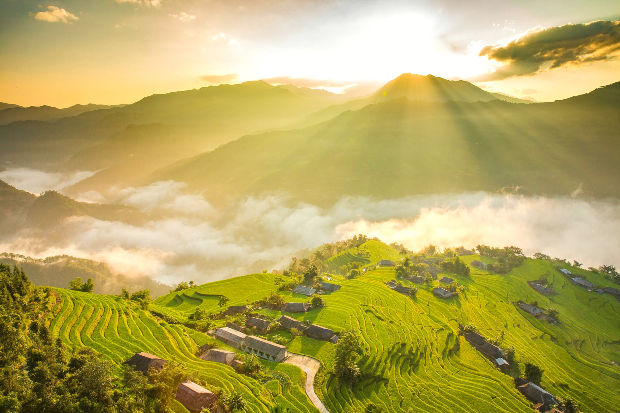
Summer in Ha Giang can still feel relatively comfortable in higher mountain areas. The scenery is lush and green, although rainfall is usually more frequent than during other seasons.
If you travel during this period, monitor the weather and road conditions carefully, especially when your itinerary includes mountain passes or remote areas.
🌾 September – October: Golden Rice Season
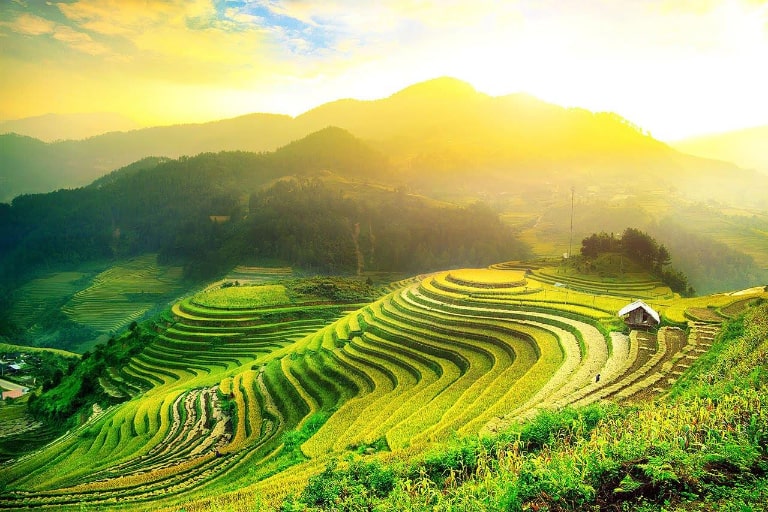
September and October are among the most popular months for visiting Ha Giang. Terraced fields in areas such as Hoang Su Phi gradually turn golden as the rice approaches harvest time.
Early autumn temperatures are generally pleasant, making this period suitable for multi-day road trips and outdoor exploration.
If seeing golden rice terraces is one of your main goals, check the actual harvest schedule before traveling because the timing may vary each year and between different areas.
🌸 October – November: Buckwheat Flower Season

Buckwheat flowers are one of the most iconic symbols of Ha Giang tourism. From late October through November, travelers often visit the Dong Van Karst Plateau to see fields of delicate pink and purple flowers surrounded by dramatic limestone mountains.
Popular areas for buckwheat flowers include Dong Van, Lung Cu, Sung La and Meo Vac.
Temperatures begin to drop during this period, especially in the early morning and evening.
❄️ December: Winter in Ha Giang
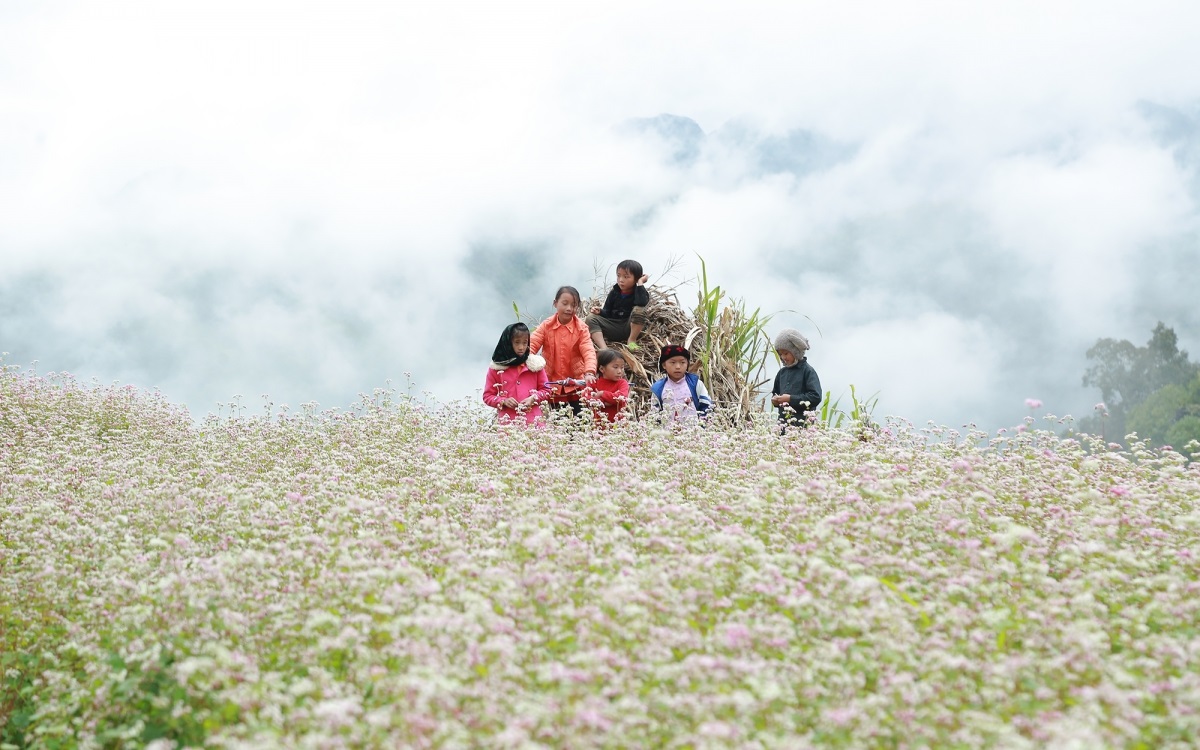
December brings colder and quieter conditions to Ha Giang. In high-altitude areas such as Dong Van and Meo Vac, temperatures can become quite low during periods of cold northern winds.
This season is suitable for travelers who enjoy the winter atmosphere of the northern mountains, but warm clothing and careful weather monitoring are essential.
So, What Is the Best Time to Visit Ha Giang?
There is no single best month for every traveler. The ideal time depends on what you would like to experience:
- January – March: Spring flowers and mountain villages.
- May – June: Green landscapes and the water-pouring season.
- September – October: Golden rice terraces.
- October – November: Buckwheat flower season.
- December: Cold mountain scenery and winter atmosphere.
Best Time for a 3-Day 2-Night Ha Giang Trip
For first-time visitors who want to combine several major attractions, September to November is a particularly attractive period to consider.
During this time, a typical journey can include Quan Ba Heaven Gate, Yen Minh, Dong Van Old Quarter, Lung Cu Flag Tower, Ma Pi Leng Pass and the Nho Que River.
How to Check the Weather Before Your Ha Giang Trip
- Check the weather forecast around 3–5 days before departure.
- Check again on the evening before traveling.
- Bring a light or warm jacket even in summer because evenings can be cool.
- Carry a raincoat or compact umbrella during the rainy season.
- Wear shoes with good grip when visiting mountainous or steep areas.
- Avoid overly tight schedules when heavy rain or dense fog is forecast.
Travel Tip for Your Ha Giang Journey
Ha Giang is beautiful throughout the year, but every season offers a different experience. Instead of choosing your travel dates based only on temperature, consider what you want to see most: flowers, golden rice terraces, dramatic mountain landscapes or the unique atmosphere of the Dong Van Karst Plateau.
Planning your itinerary around the weather will make your Ha Giang journey safer, more comfortable and more enjoyable.




Comments
No comments yet
Overall rating (0)
No approved comments yet.
Write a review